


7jl | The Allure of Strategy Games: A Deep Dive into the World of Tactical Entertainment
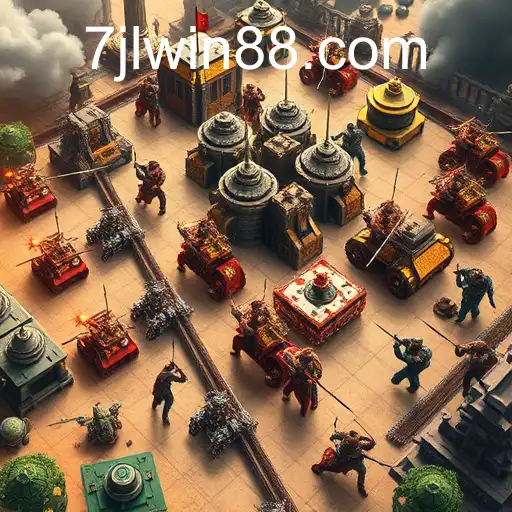
In the diverse world of video games, few genres captivate the intellect and imagination quite like strategy games. Known for their depth and complexity, strategy games offer a unique blend of intellect, foresight, and tactical mastery that both challenge and reward players in ways unparalleled by other genres. Whether you are constructing empires, managing resources, or leading troops into battle, strategy games present a diverse array of challenges that keep players engaged and thinking critically.
The essence of strategy games lies in their ability to simulate scenarios that require careful planning and execution. They demand a high level of decision-making and multitasking skills, often forcing players to think several steps ahead. From real-time strategy games like ‘StarCraft’ and ‘Command & Conquer’, which test your ability to think quickly and manage resources on the fly, to turn-based strategy games such as ‘Civilization’ and ‘XCOM’, where patience and calculated moves lead to victory, the genre caters to a wide array of preferences and play styles.
Historically, strategy games have roots in the tactical war simulations and board games of the past. Over time, they have evolved, harnessing advancements in technology to better replicate realistic environments and complex, dynamic systems. This evolution has opened the doors to expansive virtual worlds where players are free to experiment with strategies and witness the outcomes of their decisions in an immersive setting.
The appeal of strategy games extends beyond mere entertainment. They are celebrated for their educational value, encouraging critical thinking, problem-solving, and spatial awareness. Through the course of a single game, players can hone these skills in an engaging and interactive fashion.
Online multiplayer capabilities have further enhanced the appeal of strategy games, allowing players to test their prowess against others from around the globe. Platforms hosting such games often feature competitive modes, where the precision of strategy meets the spontaneity of human competition, creating an ever-evolving environment where no two games are alike.
In recent years, indie developers have breathed new life into the genre, delivering innovative titles that blend traditional strategy elements with unique concepts. This diversification has ensured that strategy games remain relevant in a rapidly changing industry, continuously attracting both veteran players and newcomers alike.
In conclusion, strategy games offer more than just an engaging pastime. They are an intellectual challenge, a training ground for advanced cognitive and problem-solving skills, and a testament to the creativity of their developers. As the genre continues to evolve, propelled by new ideas and technological advancements, its influence on both players and the broader gaming culture remains profound and enduring.
